
The Creative Convergence: Xi Feng Explores the Edges of Memory and Reality
Xi Feng's work, deeply rooted in her Mongolian heritage yet vibrantly engaging with the modern world, encapsulates a dual existence that is both a challenge and a celebration. Her journey from the grasslands of Mongolia to the urban landscapes of London and Tianjin provides rich cultural narratives that she weaves into her art. Feng's academic training, culminating in a Master of Arts in Printmaking from the Royal College of Art, has equipped her with a unique lens through which she explores the perennial themes of time, identity, and memory.
Feng’s art spans both geographic and temporal boundaries, echoing the multicultural explorations seen in the works of 20th-century artists who grappled with issues of diaspora and cultural hybridity. Like these artists, she navigates her dual heritage through a lens that is both critically engaged and deeply personal, utilizing traditional techniques such as etching and printmaking alongside contemporary mediums like resin and augmented reality. This hybrid approach mirrors the historical evolution of artistic styles, where the melding of old and new media has often been a response to changing cultural contexts.
The thematic essence of Feng’s work—its meditation on identity and memory—also taps into a long-standing artistic tradition that views art as a vehicle for personal and collective history. Her use of symbolic elements and abstract forms serves to bridge these narratives, offering a visual language that transcends cultural and temporal limits. In doing so, she continues the conversation started by artists who have used their work as a means to explore and respond to the complexities of identity in a changing world, making her contributions both a continuation and a redefinition of the themes that shape our understanding of art and history.

Q1. Your work often centers on the concept of "traces"—whether it's time's passage, cultural memory, or personal identity. Could you expand on how this idea of tracing informs your artistic process, particularly in your Traces series?
In my artistic practice, "Traces" serves as a foundational concept, not just physically but also imbued with deep meanings of time, cultural depth, and personal emotional imprints. In the "Traces" series, I employ various media and techniques to capture and illuminate the subtle yet pervasive traces that link the past with the present, individuals with communities, and nature with culture.
The idea of "Traces" embodies the passage of time—an intangible yet omnipresent force that imprints itself on everything it touches. By employing diverse materials to depict wear, fading colors, and transformations of surfaces, I capture the relentless impact of time on life.
Moreover, "Traces" deeply relates to personal identity. Our experiences, emotions, and thoughts leave indelible marks within us, shaping our personalities and identities. I explore these inner traces through my art, using abstract forms and symbolic elements to delve into themes of self-awareness and identity, allowing viewers to resonate with their own internal worlds.
Through exploring both the passage of time and the evolution of personal identity, "Traces" serves as a rich vein of artistic expression. My aim is to create works that not only reflect on the journey of life but also inspire profound engagement with the self and the broader tapestry of human experience.
Q2. As a Mongolian artist living between London and Tianjin, your work reflects a deep connection to your heritage, while also navigating the complexities of modern, multi-ethnic identity. How do you reconcile these cultural influences and personal experiences in your printmaking process?
In my printmaking, the synthesis of cultural influences and personal experiences forms a dynamic and multi-layered process. This integration extends beyond mere artistic expression to deeply explore and reflect on my multi-ethnic identity.
Mongolian culture, with its deep reverence for nature, nomadic lifestyle, and understanding of the interconnectedness between humans and the natural world, profoundly inspires my art. I strive to capture and express these natural cultural elements in my work, portraying the unique lifestyle and spiritual essence of the Mongolian people. However, living in diverse urban environments has heightened my awareness of identity's complexity, shaped by the convergence of various cultures. These experiences significantly influence my creative perspective, leading me to meld traditional printmaking techniques with contemporary artistic expressions. By using symbolic patterns, abstract forms, and mixed materials, I aim to articulate my thoughts on identity, memory, and culture.

Q3. Can you tell us about a personal experience or memory that has had a lasting impact on your creative journey? How did it shape your artistic vision?
Several pivotal experiences have profoundly shaped my artistic journey. Due to family reasons, my childhood was spent in urban settings, and it was only by chance later in life that I had the opportunity to immerse myself in the authentic Mongolian lifestyle. The expansive grasslands, the boundless sky, and the vast blue lakes deeply imprinted themselves in my memory. This return to my roots is undoubtedly one of the most significant experiences, profoundly deepening my understanding of both nature and traditional ethnic culture.
Another transformative period was during my studies and residence in London. Living abroad broadened my artistic perspective, especially in the realms of interdisciplinary practice and the integration of multiple cultures within contemporary art. This phase inspired me to articulate my fluid identity through my art and to navigate my place within a tapestry of diverse cultures. It has consistently motivated me to explore the intersection of tradition and modernity and to engage in the ongoing dialogue between local and global contexts in my work.
Q4. In your piece Ripples in Memory, you explore the metaphor of water as a representation of Mongolian culture and memory. Could you tell us more about how this work bridges personal identity with larger narratives of cultural heritage?
"Ripples of Memory" is a central piece in my exploration of the interplay between personal identity and Mongolian culture. This work uses water as a metaphor to skillfully merge the fluidity of memory with the continuity of cultural heritage. In Mongolian culture, water is revered not only as a life source but also as a sacred connector. In my art, it becomes a vessel for cultural memory, symbolizing the harmonious coexistence between humans and nature. The ripples, a tangible manifestation of memory, spread out layer by layer, illustrating both individual memories and the collective memory of the community.
This imagery powerfully captures the deep connection between my personal identity and Mongolian traditions, showing how memory flows between the individual and the collective, like water rippling outward from a central source. The fluidity of water reflects the transient nature of memory, underscoring how identity and memory are continually reshaped over time.
Living amidst diverse cultures has taught me that identity is not a fixed attribute but a dynamic process that adapts to changing environments. Through this artwork, I seek to explore the evolving interplay between the individual and their cultural context, showing how memory, deeply anchored in tradition, adapts and grows with the passage of time and space. This piece is intended to convey not only a deep emotional connection to Mongolian culture but also to provoke thought on how, within a globalized framework, individuals define and redefine their identities in a multicultural setting.


Q5. Your practice is notable for its innovative use of traditional and modern materials, like combining copper plate etching with chemical processes or integrating resin and screen printing. How do you decide which materials best convey the thematic essence of each project?
In my creative process, the selection of materials is intricately linked to the theme of each project. Each material, with its unique texture, physical properties, and symbolic meanings, is carefully chosen to best embody the essence of the theme.
For instance, when addressing themes of time and memory, I opt for copperplate etching, which is particularly apt. Copper is durable, allowing for intricate lines and complex patterns, while the etching process—characterized by chemical reactions—symbolizes both the erosion and transformation caused by time. These chemical reactions and the ensuing corrosion of metal are not merely physical processes; they also serve as metaphors for the passage of time and the gradual erosion of memory. This makes copperplate etching an ideal medium for exploring themes of history and memory.
Conversely, when aiming to represent more fluid and contemporary themes, I turn to materials like resin and screen printing. The transparency and fluidity of resin allow for the creation of layered and deep pieces, symbolizing the complexity and multiplicity of modern life. Screen printing enables the swift and precise replication of images, embodying modern industrial symbols and making it well-suited for capturing contemporary visual culture and the swift changes in society.
In conclusion, my choice of materials is not arbitrary but is thoughtfully aligned with the theme, intention, and inherent qualities of the materials themselves. Throughout this artistic journey, I continuously experiment with new combinations and techniques, exploring mediums that not only convey emotion but also amplify the meaning of the artwork. This innovative approach allows me to delve into the intricate relationships between tradition and modernity, individual and collective, nature and humanity in my art.
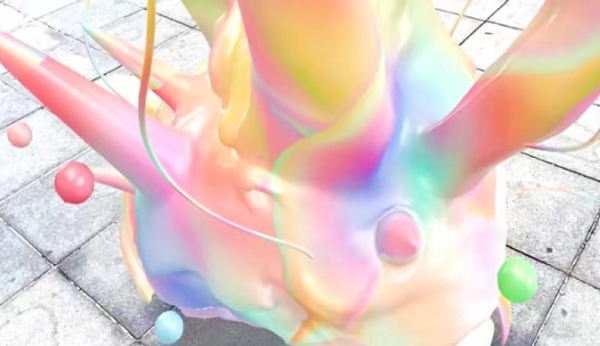
Q6. In recent years, your work has expanded into installations and augmented reality, as seen in projects like Day-Dream. How do these new media enhance your exploration of memory and time, and what challenges have you encountered in adopting these new forms?
The fields of installation and augmented reality (AR) have opened entirely new dimensions for my creative exploration. The immediacy and interactivity of AR enable me to delve into themes of memory and time in an immersive manner. Like memory, AR can overlay the present, blurring the boundaries between what was and what is, allowing audiences to interact with virtual elements and enter a more fluid world of memory.
However, adopting these new forms has presented significant challenges. The primary challenge is technical, as both AR and installation art demand a broad range of interdisciplinary knowledge and skills. The rapid evolution of these technologies requires continuous learning and adaptation. Moreover, there is a risk that new media art can become overshadowed by the technology itself. Consequently, I am careful to ensure that technology serves to enhance the artistic expression, rather than overwhelm it.

Q7. The "stone texture" motif recurs frequently in your work as a metaphor for the passage of time. How do you see the relationship between natural forms, like stone, and the abstract concept of time in your prints, installations, or other projects?
In my work, stones symbolize the passage of time. Their surfaces record the traces of weathering and erosion, much like how memory and history leave their marks over time. The solidity and stillness of stones create an interesting contrast with the flow of time, while their textures display the silent power of time.
In printmaking, I use copperplate etching to imitate the texture of stones and the layering of time, emphasizing the marks that time leaves on both nature and humanity. I believe that stones are the natural forms that most closely embody the abstract concept of time—they symbolize both permanence and the silent accumulation of changes.
